Heat pump vs gas boiler
| Heat Pump | Gas Boiler | |
| Efficiency | 300% | 90% |
| Running costs | £500–£800/yr | £800–£1,200/yr |
| Lifespan | 20+ years | 10–15 years |
| Carbon | Zero on-site | 2.7 tonnes/yr |
Plain English guide from MCS-certified installers. No jargon, no sales pitch — just how they actually work.
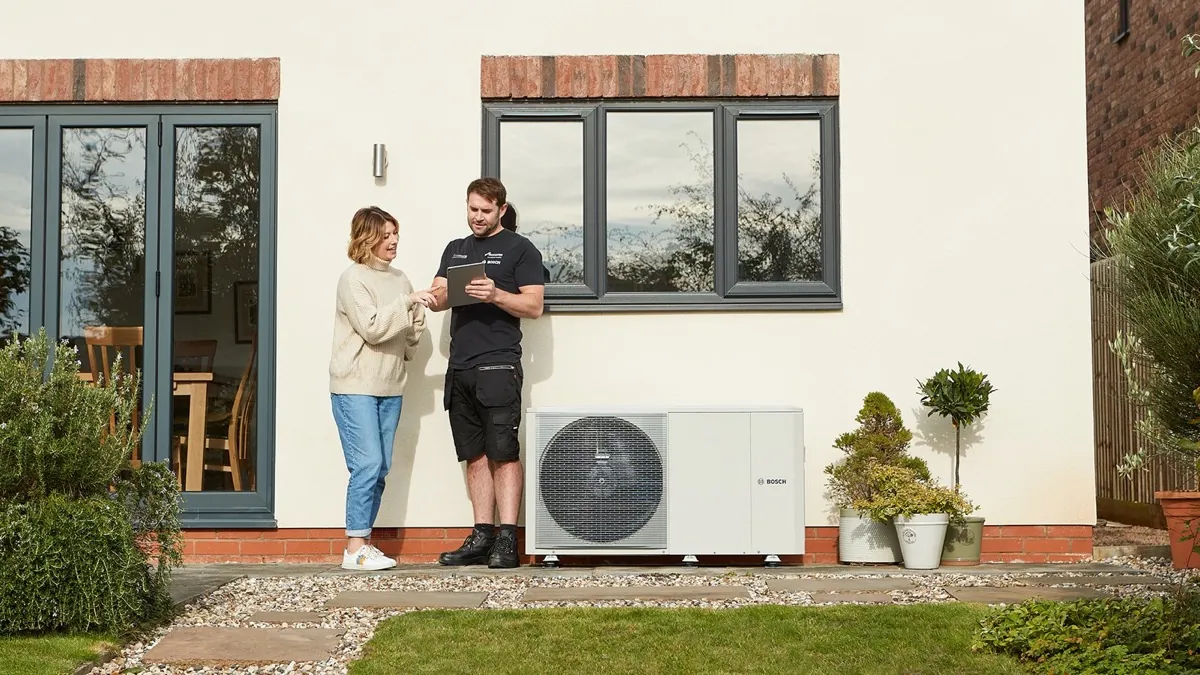
A heat pump extracts heat from outside air and uses it to warm your home. Here's how.
A fan draws in outside air across an evaporator. This works even when it's freezing — heat pumps operate efficiently down to -20°C.
A liquid refrigerant circulating through the evaporator absorbs the heat energy from the air and turns into a gas.
An electrically powered compressor squeezes the gas, concentrating the heat to a much higher temperature — typically 45-55°C.
The hot gas passes through a heat exchanger, transferring its heat to your central heating system and hot water cylinder.
The refrigerant cools back down, returns to a liquid, and cycles back to the evaporator. The process repeats continuously.

The questions we get asked every week, answered honestly.
No. Heat pumps run entirely on electricity. No gas connection needed, no gas safety certificate, no carbon monoxide risk. You can disconnect your gas supply entirely.
Yes. Modern air source heat pumps work efficiently down to -20°C. The refrigerant boils at around -30°C, so there is always heat energy to extract — even on the coldest UK winter days.
Yes. Heat pumps work with your existing radiators. Because they run at lower flow temperatures than boilers, some radiators may need upsizing — but many homes need no changes at all.
They modulate — running low and steady rather than cycling on and off like a boiler. This is more efficient. Think of it like cruise control vs stop-start driving.
300-400% efficient. For every 1kW of electricity a heat pump uses, it produces 3-4kW of heat. A gas boiler manages 90% at best. That's why running costs are lower.
A hot water cylinder is included as part of the installation. It works just like a boiler system — the heat pump heats the cylinder, and you draw hot water from it as normal.

| Heat Pump | Gas Boiler | |
| Efficiency | 300% | 90% |
| Running costs | £500–£800/yr | £800–£1,200/yr |
| Lifespan | 20+ years | 10–15 years |
| Carbon | Zero on-site | 2.7 tonnes/yr |
Real reviews from real customers.
"I can not fault the people from day one till completion."
"Swift, efficient, friendly, SMALL, local people. No expensive add on's!"
"Alex and his team offer a far superior service well above others."
Straight answers to the most common heat pump questions.
Get an instant estimate — enter your postcode and see your costs in 60 seconds. Or call us to book a free survey.