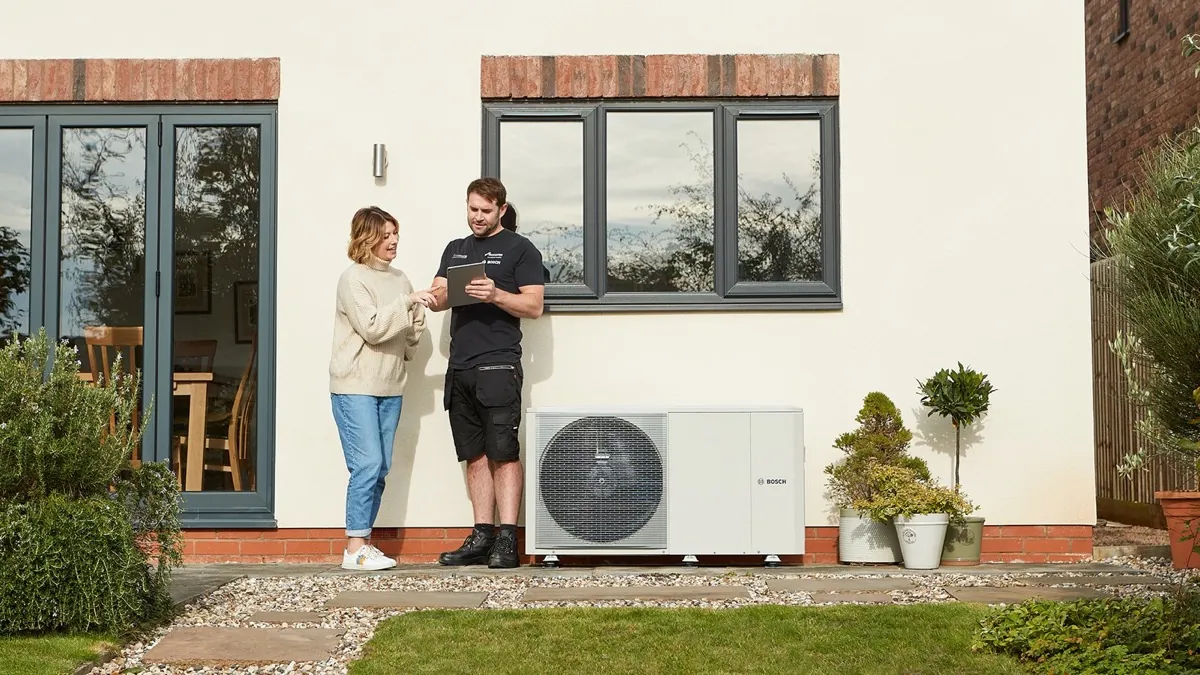
The short answer
Yes, for most homes. With the £7,500 government grant and 0% VAT, the upfront cost has dropped dramatically. Running costs are 30-50% lower than gas and 60-70% lower than oil. The payback period is typically 5-8 years, and the system lasts 20+ years.
We install heat pumps every week. We also tell people when they're not the right fit. Here's how to work out whether one makes sense for your home.
Running costs compared
These are real-world figures based on a typical 3-bedroom home. Your actual costs depend on insulation, property size, and usage patterns — but this gives you a reliable ballpark.
| Fuel type | Annual cost (3-bed) | CO₂/year |
|---|---|---|
| Air source heat pump | £500-£800 | 0 (on-site) |
| Gas boiler | £800-£1,200 | 2.7 tonnes |
| Oil boiler | £1,200-£1,800 | 3.5 tonnes |
| LPG boiler | £1,400-£2,000 | 3.2 tonnes |
| Electric storage heaters | £1,500-£2,500 | 0 (but expensive) |
The reason heat pumps are cheaper despite electricity costing more per kWh than gas: efficiency. A heat pump delivers 3-4kW of heat for every 1kW of electricity it uses. A gas boiler burns 1kW of gas to produce less than 1kW of heat.
The maths
Here's how the numbers work for a typical installation in 2026.
After the payback period, that's 12-15 years of pure savings. If you're replacing oil or LPG, the numbers are even better — you could save £600-£1,000 a year, meaning payback in as little as 3-5 years.
When heat pumps don't make sense
We're installers, but we're also honest. There are situations where a heat pump isn't the right answer.
- Very small flats where there's nowhere to put the outdoor unit. The external unit needs wall or ground space. If you've got no garden, yard, or suitable wall, it may not be physically possible.
- Properties where you'd need to replace every radiator. This is rare, but it happens — usually in older homes with undersized radiators throughout. If the radiator upgrade cost pushes the total beyond what the savings justify, we'll tell you.
- If you've just installed a brand-new gas boiler. Wait until it needs replacing. A boiler that's 1-2 years old has another 10-13 years of life. The economics don't stack up until it's near end of life.
We assess every property individually during a free survey. If a heat pump doesn't make sense for your home, we'll say so.
Efficiency explained
Heat pumps have a Coefficient of Performance (COP) of 3-4. That means for every 1kW of electricity the pump uses, it produces 3-4kW of heat. That's 300-400% efficient.
A gas boiler, by comparison, maxes out at about 95% efficiency — it burns 1kW of gas and produces 0.95kW of heat. Even the best gas boiler wastes 5% of its fuel.
This is why running costs are lower despite electricity costing roughly 4x more per kWh than gas. The heat pump's efficiency more than compensates for the higher electricity price. And as electricity gets greener (more wind, more solar on the grid), the running costs and carbon footprint only improve.
In simple terms: a heat pump doesn't generate heat by burning anything. It moves heat from outside air into your home — even when it's cold outside. That's why it can deliver 3-4x more energy than it consumes.